

Over the past few years, a particular interest of the construction industry and, by extension, building surveyors who focus on the details of their design and implementation, has been the use of more natural building materials.
One particularly interesting and remarkably promising material is the use of sheep wool, more commonly associated with jumpers and blankets, for insulation.
Whilst the idea of using wool to keep buildings warm sounds as if it comes from an era of wattle and daub, and indeed has been used to keep Mongolian yurts warm for thousands of years, recent wool insulation is relatively modern in development, scope and interest.
Can the same wool used to make comfortable cardigans really be used to efficiently keep your home warm? Find out more about why sheep wool is good for your home, good for your bank balance, good for the economy, good for the planet, and good for the sheep too!
Why Is Sheep Wool Effective For Insulation?
Whilst the sheep wool used for insulation is different to that used in a scarf, the principle behind its warmth works in much of the same way.
A woolly weather keeps its warmth despite often having large holes because the unique crimped nature of the wool fibres traps air efficiently, creating a breathable yet highly effective seal that stops cold air from getting in but also keeps warmth from getting out at a significant rate.
The same principle applies to wool insulation, albeit at a much more technical and mechanical level. The woollen fibres are bonded or tied together in precise patterns to essentially wrap the home and create the same breathable insulating properties.
Is Using Sheep Wool For Insulation Economical?
Whilst woolly clothing can be expensive at times, particularly for high-grade merino wool and especially cashmere, the types of wool used for insulation are not clothing grade and are remarkably affordable relative to expectations.
Lighter, softer wools tend to be more valuable for clothing than dark, coarse wools, but the latter can still be used to make highly effective insulation that by definition is seldom seen once it is installed.
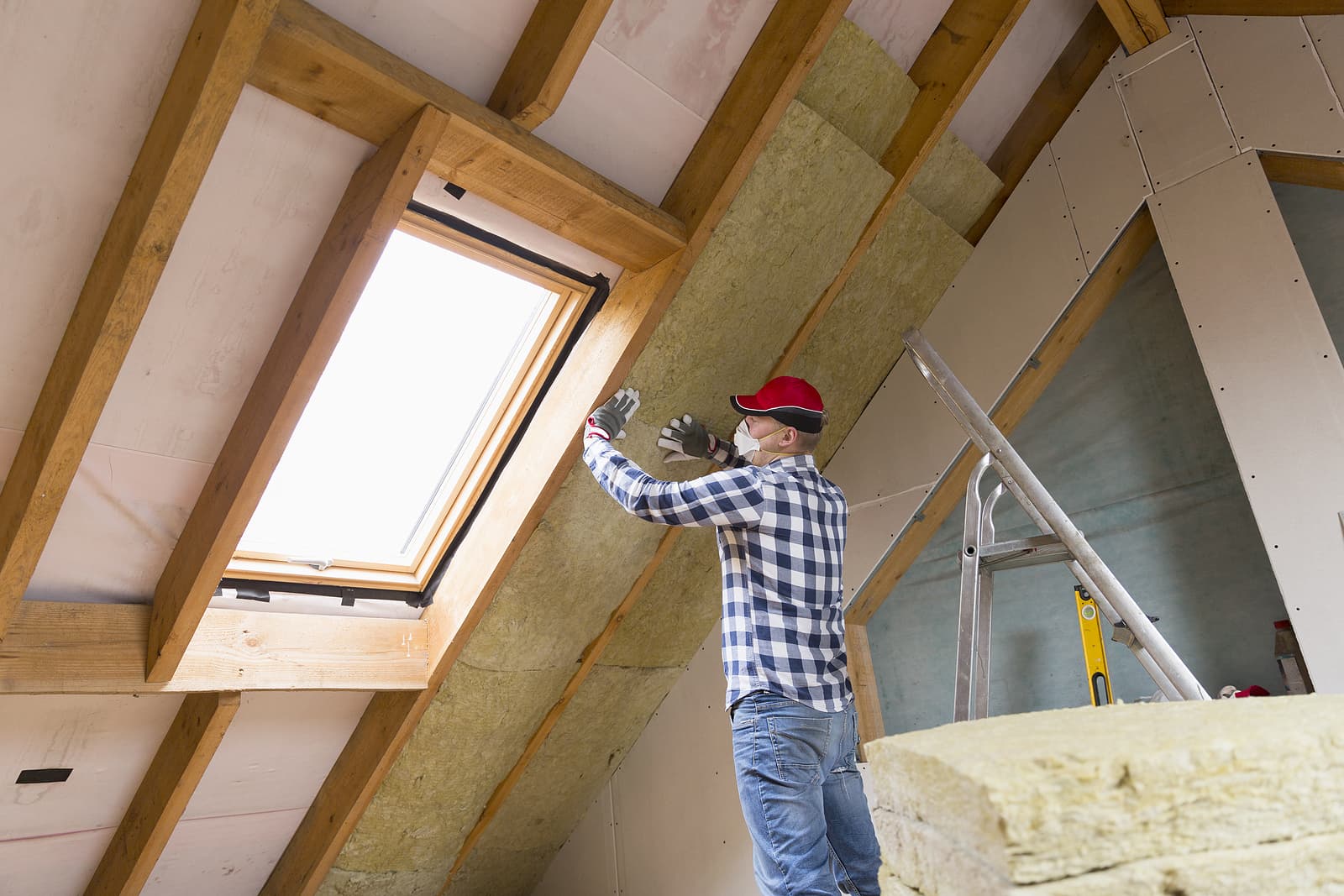
It compares to materials such as spray foam and corkboard, but it is far easier and safer to install than practically any other insulation material. It can be installed using conventional batts that fit in the cavities of the frame of a building, either using staples or friction to remain in place.
It can also sometimes be less difficult to install, as unlike fibreglass or mineral wool, you do not need protective gloves and masks to install it.
It provides considerable savings over the lifetime of the building, as it is long-lasting, has exceptional thermal performance and can contribute to lower energy bills.
Does Sheep Wool Stop The Development Of Mould?
Another major reason why sheep wool is such a good insulator can also be found in its use in thermal fleeces. It is remarkably effective at wicking moisture, drawing sweat and perspiration from your body and thus more effectively regulating body temperature.
This principle applies in its remarkable ability to manage humidity and reduce the development of damp, which makes it particularly effective at maximising the longevity and functionality of timber-framed buildings.
It naturally regulates moisture, stopping it from building up and thus contributing to rising damp. Its natural breathability also helps to better regulate the air quality of the building it is installed in, reducing the risk of issues such as sick building syndrome.
Wool used for insulation is also moth-proofed, scoured, bound, and turned into a uniform material ideal for use in the home.
Is Using Sheep Wool For Insulation Ethical?
The big question that will always be asked of naturally derived materials is one of ethics: Is using sheep wool for insulation an ethical utilisation of the material?
The answer is a resounding yes; sheep need to be sheared as they do not shed their woolly coats, which get tangled, dirty, heavy and too warm to be comfortable in summer. Sheep shearing is carefully managed with the welfare of the animals taking priority.
Sheep shearing is also essential for checking on the welfare of sheep; big overgrown coats can mask an undersized or underfed sheep if they are left long enough, and it is easier to see the potential lumps and signs of distress that may require them to see a vet.
The problem is that not all wool sheared from sheep can be used to make clothing and textiles. Some of it is too coarse or too rough to be comfortable, whilst others are too dark a shade to be effectively dyed without bleaching.
This wool would otherwise go to waste, but by using it in insulation, it can avoid filling landfills with materials that could so easily be put to vital use, keeping our homes and buildings warm.
If the sheep could talk, they would probably not see its use as “baa-d” in the slightest. Instead, they would be rather happy and maybe a little amused that their shedded hair is being used to keep homes and cottages warm across the country.
Is Sheep Wool Sustainable?
It is a highly renewable material, inherently natural and very quick to replenish itself. All you need to redevelop a supply of wool is some water for the sheep to drink, some grass for them to eat and the natural air and sunshine of the British countryside.
With all of those little creature comforts, a sheep will produce a fleece ready for use every year, at a rate faster than even trees or other natural renewable materials.
As well as this, unlike some types of artificial insulation, sheep wool is sourced from British farmers, meaning that the embodied cost from the field to your home is exceptionally low.
Are There Any Other Advantages To Using Sheep Wool?
- Wool’s high nitrogen content and natural moisture make it remarkably flame resistant even without additional chemical treatments.
- Low carbon footprint, particularly compared to synthetic insulation materials.
- Wool is naturally breathable, maximising thermal performance.
- Wool has natural sound insulation properties.
- Wool can last the lifetime of a building.
- Wool is safe to use, unlike fibreglass or other insulation materials.