

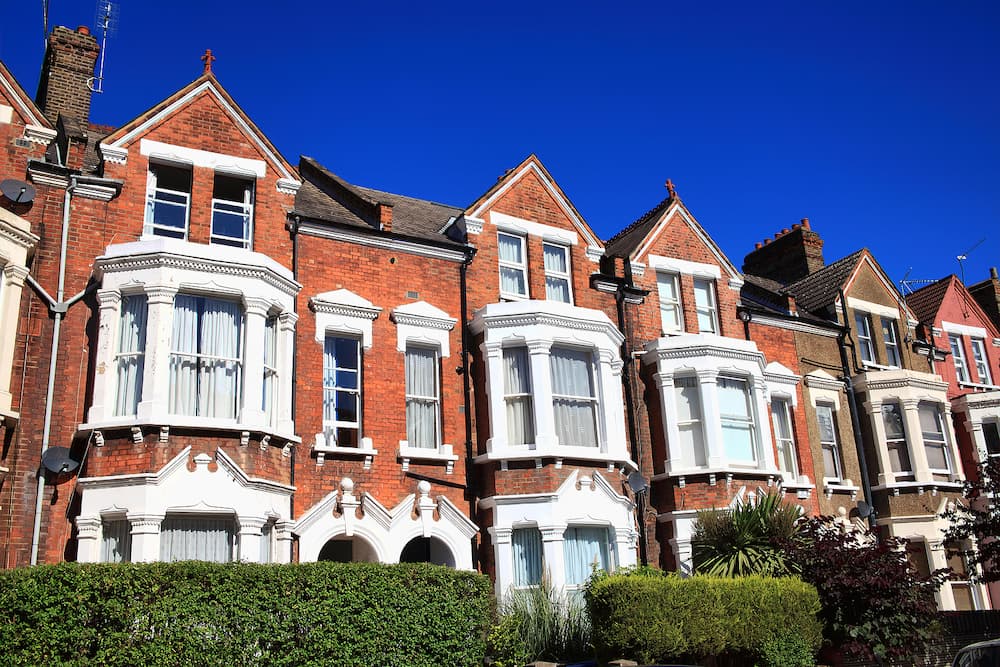
Victorian houses will always be popular among homebuyers, but while their period features are stylish and their historical value is undoubtedly appealing, it is important to consider their potential defects too.
Popularity of Victorian homes
Newbuild properties might be on the rise, but Victorian architecture remains incredibly attractive to Brits.
In fact, according to Rightmove, it is the number one searched for period property style. This is followed by Georgian, Edwardian, Tudor and Regency.
According to the property search website, Victorian houses are popular due to their intricate features, their spacious rooms and their detailed facades.
Victorian properties also range from terraced two-up-two-down homes to large detached villas. Therefore, most homebuyers will be able to find one that fits within their budget if they are looking for a 19th century property.
Potential defects in Victorian properties
Despite being so popular, as Victorian properties are well over 100 years old, homebuyers need to be prepared for defects when getting the keys to their period house.
These can be small issues, such as paintwork needing to be redone or chips in the plastering, or major problems that may require structural engineering work.
Here are a few of the big issues buyers should get chartered surveyors in Richmond to check for before they exchange contracts, just in case their dream property turns out to be a nightmare.
– Failing lath and plaster ceilings
Victorian homes typically have ceilings that are made from thin strips of wood called laths that are covered in plaster.
The reason for this choice of material is that they last a long time, which is why many Victorian houses have not had their ceilings replaced or replastered since their construction.
However, this means if they are the original ceilings, there is the risk they will fail sometime soon. This could be due to water damage, which weakens the structure, or the plaster becoming brittle over the years.
If there is lots of traffic on the floor above the ceiling, this can cause the plaster to become removed from the wooden strips. Consequently, the ceiling could begin to sag, and it might even collapse.
While the ceiling has remained intact over the decades, it could just fail one day, causing significant damage to the rest of the room and the floor above.
Surveyors will look for signs of failure, including large cracks in the plaster, bulging in the ceiling, a hollow sound when tapping, or dust falling down.
– Dampness
It is common to see signs of dampness in Victorian houses, mainly due to their solid brick wall construction and the lack of ventilation in the building.
This means moisture from things like boiling kettles, cooking, and drying wet clothes in the house gets trapped in the structure and is unable to escape.
This lack of ventilation is often exacerbated by modern improvements that have been made over time, such as blocking the chimney, plastic paints on external walls or installing new windows.
Solid brick properties are also more likely to become damp as they allow rainwater to seep in, while rising damp can occur in older homes due to failed damp proof courses.
Some signs of dampness can be detected when viewing the property, such as peeling wallpaper, water droplets on the wall or windows, rotting skirting boards, mould growth, or tide marks.
However, a professional surveyor will also be able to detect more discrete signs of dampness. For instance, they might detect humidity in the rooms, see some crumbling plaster, smell a musty scent, or feel cold walls.
Most often, dampness is a problem that can be fixed through simple remedies, such as improving the heating or ventilation of the property, using extractor fans, venting the tumble dryer, or putting lids on pans when cooking.
However, occasionally, it needs more work, such as a damp proof course, repairing or replacing gutters, fixing renders, or repointing the property.
– The risk of Victorian roof coverings
The longevity of roof coverings is determined by the material they are made from. For instance, a mineral felt roof will only last ten or so years while stone roofs can survive two centuries or more.
Victorian homes typically had slate roofs, with this trend replaced with clay tiles towards the end of the 19th Century.
Both of these have a good lifespan, with natural slate typically lasting 100 to 180 years, and clay tiles remaining in good condition for around 125 to 250 years.
However, this means that the roofs of houses built in the Victorian period might be coming to the end of their lifespan.
It is, therefore, important to get the roof checked by a professional to ensure it is in good condition and will last a while yet.
They will look at a number of things, including the condition of the houses on the rest of the street, as they are likely to have been built at the same time and with the same materials. If some have new roofs, this is a sign their original roof covering failed and needed to be replaced.
Surveyors will also look for a significant number of missing or slipped slates or tiles. While a couple of slates might need repairing, if there are lots that have shifted, this could mean the entire roof needs replacing.
They will also take a good look at the roof junctions to see the condition of the flashings.
These will give a good indication on whether the roof is on its last legs or if it still has some life left in it.
– Insulating Victorian properties to achieve improved u-values
As period homes were built a long time ago, they do not tend to be well insulated. Therefore, they typically have high u-values, which is the speed at which the heat is lost through a material.
Therefore, a Victorian house is likely to have high u-values, which means heat will escape at a fast speed. Energy will be wasted in trying to heat up the home and fuel bills will be greater.
This will not only affect the homeowner’s finances, but it could also be a problem when they come to sell the house, as buyers are increasingly likely to look for better-insulated and more environmentally-friendly homes.
Therefore, owners of Victorian properties can expect to invest a substantial amount in improving the insulation of their home, from installing loft and cavity wall insulation to replacing the windows.
– Single glazed sliding sash windows
This brings us on to the state of the windows. While sliding sash windows are great original features of Victorian homes, they are not good for homeowners’ monthly outgoings.
This is because the authentic windows will be single-glazed, which means they do not trap heat in or keep heat out. According to uSwitch, a typical home loses ten per cent of its heat through the windows. However, this increases significantly for houses that have single glazing.
Therefore, during the winter months, homeowners will have to crank up their heating to maintain a comfortable temperature in the house, as a lot of the heat will escape through the windows.
In order to improve the insulation and lower fuel bills, homeowners will need to invest in a full replacement of the windows, installing double-glazed ones instead. This can be a significant expense, and a financial outlay they might not have been expecting.
– Separation cracking at the junction of main buildings and outriggers
Finally, it is essential to look at whether there is any separation or cracking at the edge of the main structure and outriggers.
This could be caused by varying settlement between the structures due to age, different foundations, distinct building materials that respond to temperature changes differently, or poor construction.
If the fissures are more than a hairline crack, it could be a cause for concern, not only as it indicates a separation of the adjoining structures but it also means that water is able to penetrate the brickwork and cause damp issues.
It might require structural repairs to fix the problem, from stabilising the foundations to improving the drainage of the ground.